
Trustworthy AI, safer hearts: building the European ecosystem for AI adoption in cardiovascular and related non-communicable disease care.
A PAN-EUROPEAN FLAGSHIP INITIATIVE
From connected data to AI that works in practice
Cardiovascular diseases are the leading cause of death and disability in the European Union, responsible for more than 1.7 million deaths and an estimated €282 billion in costs every year. AI and health data can improve prevention, early detection and personalised care, but promising AI tools rarely make it from validation into routine practice.
CHAIN creates the conditions for trustworthy cardiovascular AI to move from validation to real-world deployment at scale across Europe. It connects fragmented cardiovascular data through CardioData@EU, a federated infrastructure aligned with the European Health Data Space (EHDS), makes validated AI discoverable, and tests selected AI solutions in six real-world use cases.
The project is coordinated by the European Society of Cardiology (ESC) and co-funded by the European Union’s EU4Health programme.
53
partner organisations
20
European countries
6
real-world use cases
3
years, from October 2026
OBJECTIVES
What CHAIN sets out to achieve
Build a European cardiovascular data and AI ecosystem aligned with the EHDS
- Connected data: EHDS-aligned data standards, a European cardiovascular phenotype library, a metadata catalogue and data quality tools based on HL7 FHIR® and OMOP CDM.
- Federated learning: a network of data nodes that trains and validates AI models where the data lives, without moving it to a central repository.
- Discoverable AI: a FAIR repository of mature AI solutions, each documented with an AI Passport.
- A growing network: new data holders onboarded through an open call.
Demonstrate, evaluate and prepare the scale-up of trustworthy AI in real-world care
- Real-world implementation: AI solutions deployed in routine clinical and population-health settings across six use cases.
- Evidence: evaluation of technical performance, clinical utility, fairness, usability and health-economic impact.
- Safe deployment: integration toolkits, guidelines and training for healthcare organisations.
- Regulatory readiness and sustainability: guidance aligned with the AI Act, MDR and EHDS, and a European strategic roadmap for AI and data in cardiovascular health.
USE CASES
Six real-world use cases across Europe
Selected AI solutions are tested in different clinical settings and populations, from prevention to diagnosis.
Personalised cardiovascular risk trajectories
Population risk prediction that follows how an individual’s cardiovascular risk evolves over time.
Turning guidelines into personalised care
Clinical decision support that brings ESC guideline recommendations to the individual patient.
Earlier detection from routine ECGs
AI-based ECG triage that flags patients who need attention sooner.
Faster, more consistent echo and CMR
AI-assisted cardiac imaging analysis, with mandatory human verification.
Earlier detection of right-ventricular failure
Multimodal risk stratification that combines several data sources.
Cardiovascular insights from routine chest CT
Opportunistic screening that reuses chest CT scans taken for other reasons.
PONTEGRA’S ROLE
Leading the FAIR AI Repository
Pontegra leads Work Package 5, which delivers the FAIR AI Repository: a single, machine-processable access point for validated, deployment-ready cardiology AI.
- Repository portal and catalogue: a harmonised metadata schema covering model provenance, datasets, validation results and regulatory status, with search, filtering and RESTful APIs for researchers, clinicians and regulators.
- AI Passport: structured documentation of each model’s full lifecycle, from data curation and training to validation, deployment and post-market monitoring.
- Agentic discovery and ingestion: pipelines that find AI models in public sources, then validate, align and publish their metadata with a human in the loop.
We also contribute to the data and deployment foundations
Data quality: leading the assessment framework for HL7 FHIR datasets
ETL toolkit: co-leading the harmonisation of local data to HL7 FHIR and OMOP CDM
AI monitoring: leading the service that tracks performance, drift and bias of deployed models
Ecosystem: infrastructure design, use case specifications, federated learning, the open call and capacity building
The tools behind this work, such as Ignifyr for FHIR data integration and Studyfyr for governed research on FHIR and OMOP, are part of our products.
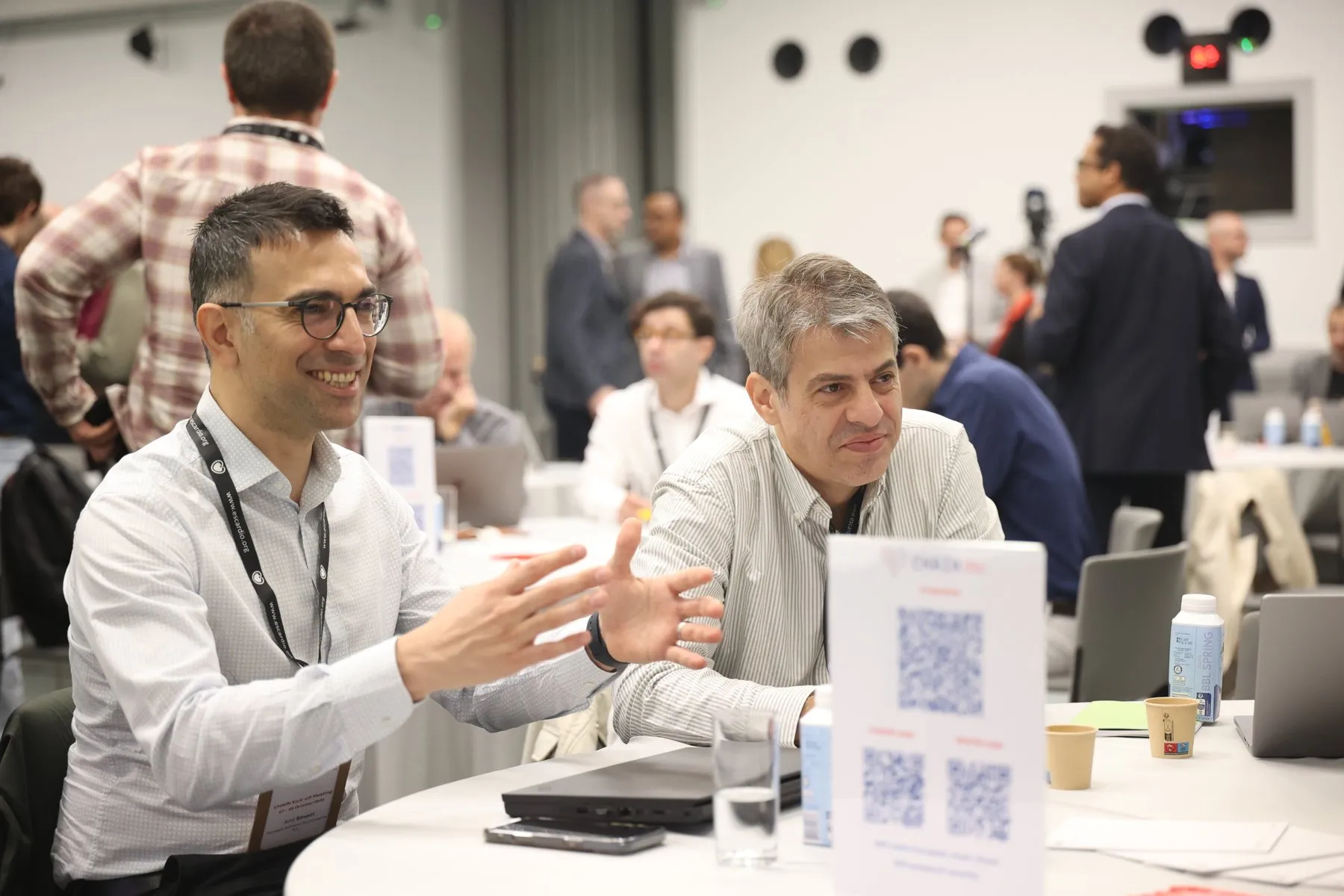
The CHAIN kick-off
7–8 October 2026 · European Heart House, Sophia Antipolis
Read about the kick-off meeting in our news post: Pontegra kicks off its first European Commission supported project: CHAIN.
GET INVOLVED
Interested in CHAIN or the FAIR AI Repository?
Follow the project on its website and LinkedIn, or contact us to talk about how your organisation’s data or AI solutions could take part.
The CHAIN project is co-funded by the European Union’s EU4Health programme under Grant Agreement No. 101314833. Views and opinions expressed are those of the author(s) only and do not necessarily reflect those of the European Union or HaDEA. Neither the European Union nor the granting authority can be held responsible for them.